
Introduction & market context (chapter 1 of the overview deck): current AR challenges, ChronoOptix solution & vision, integrated system innovation, and market opportunity & landscape.
This page follows the introduction & market context chapter of the XR Spatial Computing Overview deck: agenda item 1 before the product & technology chapter.
Figures track the same slide exports as the PDF/PPTX companion. Quantitative TAM charts and vendor-specific comparisons stay in gated materials—confirm under NDA.

Five barriers on the overview deck’s “current AR challenges” slide—each illustrated with a different export.

Current AR glasses are heavy and uncomfortable for daily wear—the deck’s first challenge before field-of-view and brightness.

Restricted visual area reduces immersion and task usefulness until optics and rendering are co-designed.

Difficult to see AR in bright environments without brightness and combiner strategies aligned to real deployments.

Expensive production and integration still cap mass adoption; program economics sit with the business chapter—see Investors for the public-safe summary.
Enterprise, defense, and medical programs need fieldable optics and predictable behavior—not lab-only demos.
The solution chapter introduces lightweight all-day AR, energy harvesting aligned to optics, varifocal depth with a proprietary deterministic engine, and an integrated stack—with product art carried by the slide export below.
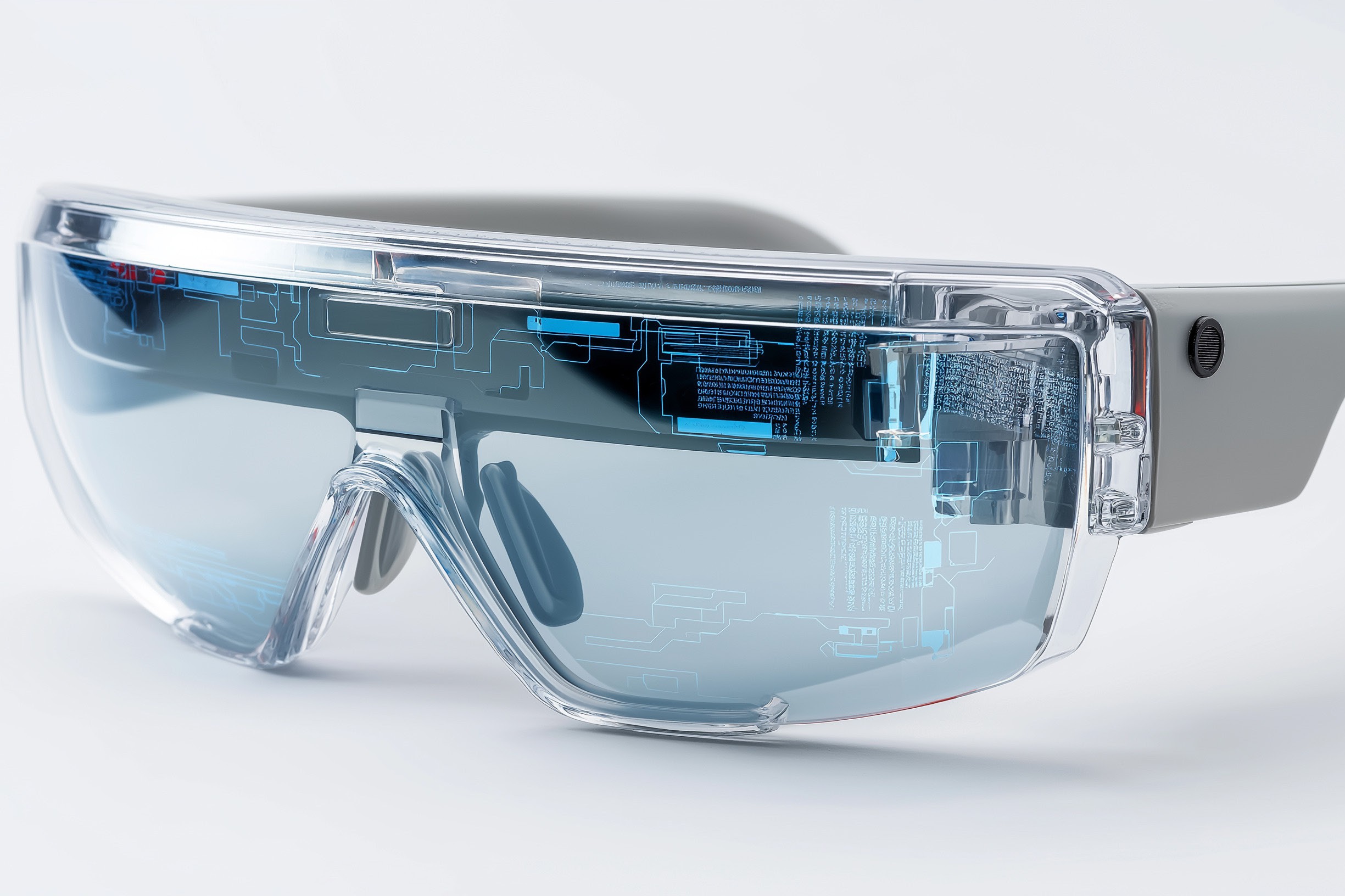
Same narrative as the dedicated slide: a unified technology stack for seamless spatial computing; synergistic innovation so optics, power, sensing, and compute reinforce one another; and a holistic system architecture where every component improves the overall AR experience.
Five lenses from the overview deck’s landscape slide—headline sizing and vendor charts stay in gated materials.
For business model, revenue streams, and diligence steps, see Investors.
Use the secure contact form on the Contact page for agendas, diligence, press, or OEM discussions.
The full inquiry form lives on the Contact page (FormSubmit + map).